

Installing a ceiling fan may seem straightforward, but in Australia, it involves more than mounting hardware and connecting wires.
It’s classified as electrical work, and that means it’s governed by law. If done incorrectly or without the proper license, it can lead to safety risks, fines, and voided insurance.
At I & B Electrical, we’ve installed ceiling fans in homes and small commercial spaces across New South Wales. We know what a safe installation looks like, and we’ve seen what happens when shortcuts are taken.
This guide explains what’s required for a compliant ceiling fan installation, so you know what to expect, what’s legal, and when to bring in a licensed electrician.
DIY Ceiling Fan Installation Is Not Legal in NSW
Under New South Wales law, ceiling fan installation must be carried out by a licensed electrician. That includes:
- Installing new fan points
- Replacing old light fittings with ceiling fans
- Connecting fan wiring or switches
No exceptions apply to homeowners or handymen. Even if you’ve done similar work before, attempting this without a licence is illegal.
The risks go beyond fines. Non-compliant electrical installation work can:
- Cause electrocution or fire
- Breach your home insurance policy
- Lead to prosecution under the NSW Fair Trading regulations
If your ceiling fan installation involves wiring or mounting, it must be done by a qualified professional. This isn’t a recommendation; it’s the legal requirement backed by safety standards.
Planning Your Ceiling Fan Installation
Before bringing in a licensed electrician, it helps to plan the type of fan you need and where it should go. This ensures the installation suits the room’s size, layout, and function.
✔ Room size vs fan diameter
Smaller rooms (under 15 sqm) typically suit fans around 122 cm. Larger spaces may require 132 cm or more to circulate air effectively.
✔ Ceiling height matters
Your fan blades must sit at least 2.1 m above the floor to meet Australian safety standards. For low ceilings, hugger-style fans may be more appropriate.
✔ Indoor vs outdoor-rated
Only outdoor-rated fans should be installed in covered patios, balconies, or alfresco areas. These models are designed to resist moisture and corrosion.
✔ Lighting and controls
If you need overhead lighting, choose a model with a built-in light kit. For more straightforward operation, consider fans that include a remote or are compatible with wall switches.
What a Safe & Compliant Installation Involves
A legal ceiling fan installation involves more than mounting the unit and connecting wires. It must meet safety standards set by the AS/NZS 3000 wiring rules and the NSW regulator.
✔ Fan-rated ceiling support
Fans must be mounted to a fan-rated ceiling box, fixed directly to a ceiling joist or support batten. Standard light fittings are not strong enough and will fail under a fan’s weight and vibration.
✔ Correct electrical wiring
All wiring must follow approved layouts, including proper earthing, neutral and active connections, and secure junctions. Loose or incorrect wiring increases the risk of electric shock or fire.
✔ Clearance compliance
Blades must be:
- At least 2.1 m above the finished floor
- Minimum 300 mm away from any wall or obstruction
These measurements are mandatory and ensure safe operation.
✔ Testing and certification
Once installed, the fan must be tested for:
- Smooth operation at all speeds
- Balanced blade movement
- Remote function (if applicable)
Always remember to ask your electrician to provide a Certificate of Compliance to confirm the work meets Australian standards.
What to Expect from a Licensed Electrician
When you hire a licensed electrician for ceiling fan installation, you’re not just paying for the work; you’re paying for legal compliance, accountability, and safety.
Here’s the process that we and many other professional installers include or should include:
✔ Site assessment
Your electrician will inspect the ceiling structure, check access to power, and confirm whether the current wiring and mounting box are suitable.
✔ Power isolation and setup
Before anything begins, power to the area is shut off at the switchboard. Voltage testers are used to verify that the wiring is completely de-energised.
✔ Mounting and wiring
The fan is securely mounted to a fan-rated support structure. All wiring is completed using compliant cable routes, terminals, and earthing.
✔ Testing and fine-tuning
Once installed, the fan is tested across all speed settings. Any remote control functions are synced and checked. Blade alignment and balance are adjusted as needed.
✔ Certification
You should receive a Certificate of Compliance at the end of the job. This confirms that the installation meets NSW and national standards, which are essential for insurance and resale purposes.
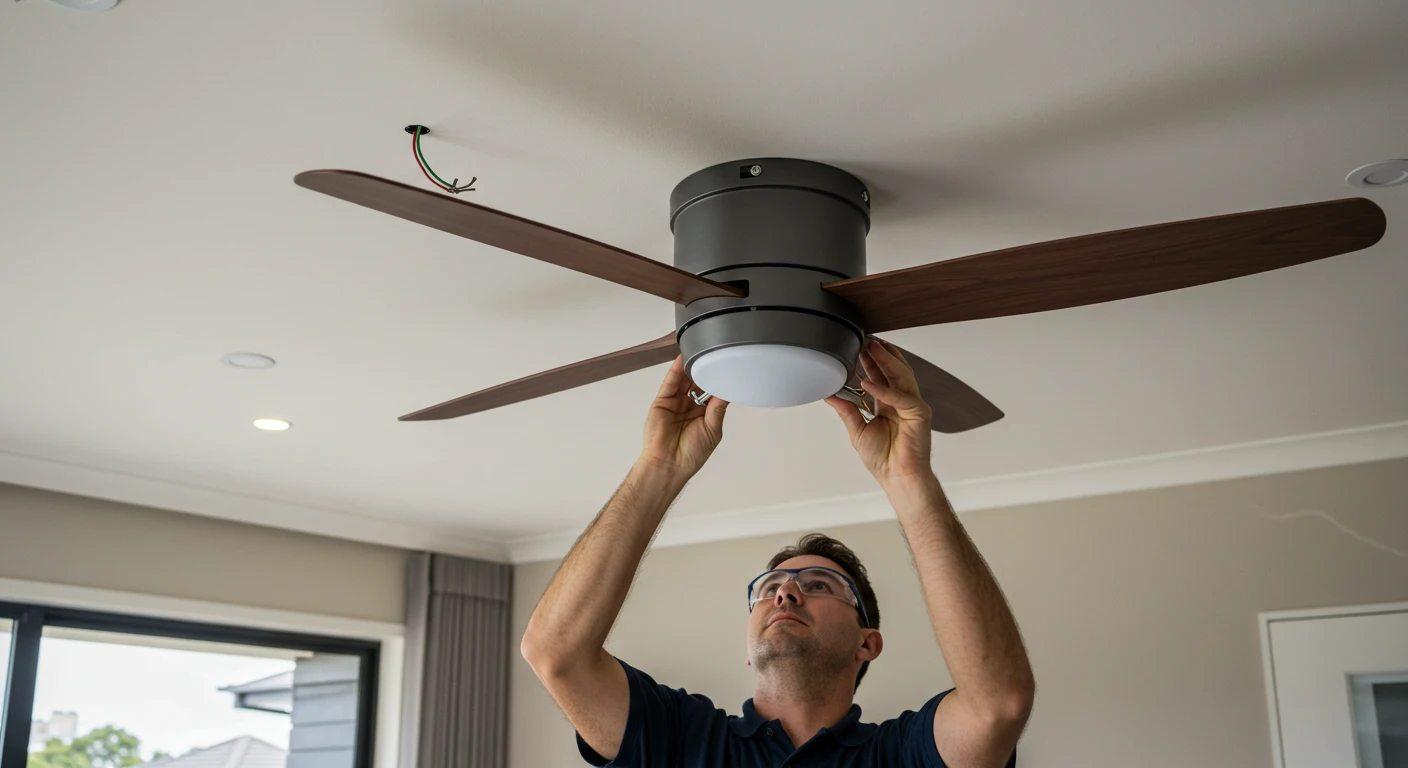
Signs Your Ceiling Fan Isn’t Installed Correctly
Not all problems show up on day one, but there are clear signs a ceiling fan hasn’t been installed correctly. Ignoring them can lead to damage, failure, or safety hazards.
Watch for these:
✘ Wobbling or vibration
This usually means the blades are unbalanced or the mounting bracket is loose. It can also indicate the fan isn’t secured to a joist or rated support.
✘ Humming or buzzing sounds
Persistent noise could point to improper wiring, over-torqued screws, or low-quality components. It may also mean the fan isn’t isolated correctly from ceiling vibration.
✘ Flickering lights or an unresponsive remote
If your fan includes a light kit or remote, these should operate smoothly. Inconsistent behaviour suggests poor connections or signal issues, both of which require correction.
If any of these occur, the safest move is to call a licensed electrician to inspect and correct the issue. Faults left unaddressed can worsen over time.
Maintenance Tips to Keep It Running Smooth
Ceiling fans don’t need much upkeep, but ignoring basic maintenance can lead to performance issues over time. A few simple checks every few months will keep things in good shape.
✔ Clean the blades
Dust buildup throws off balance and makes the fan noisier. Use a soft, dry cloth or microfiber duster. Avoid wet wipes or sprays that could seep into the motor housing.
✔ Listen for unusual sounds
Clicking, humming, or grinding usually means something’s loose or out of alignment. Check visible screws or mounting points and contact a licensed electrician if it persists.
✔ Test your remote or wall switch
If your fan uses a remote, test it monthly. Replace batteries when response slows or buttons misfire. For wall-mounted controls, ensure the switch operates smoothly without delay.
These small checks help prevent wear and ensure your fan stays reliable year-round.
Call I & B Electrical When You Need It Done Right
Some tasks are best left to professionals, and ceiling fan installation is one of them. It’s not only illegal to do without a licence, but it can also void your insurance and create long-term safety issues.
You should contact a licensed electrician when:
- You’re installing a new fan point or switch
- Replacing an old light fitting with a ceiling fan
- Your existing fan is making noise, wobbling, or not responding
- You want the job to be certified to meet NSW compliance rules
At I & B Electrical, we provide fully compliant fan installation services across NSW. Our licensed team handles every part of the job, from assessment to certification, so you don’t have to worry about what’s behind the ceiling.
Compliance First, Always
Installing a ceiling fan isn’t about tightening a few screws and hoping for the best. It’s a licensed task, tied to electrical regulations that exist for good reason. When done correctly, it improves airflow, reduces energy costs, and adds value to your space. When done incorrectly, it risks injury, fines, and insurance problems.
If you’re planning to install a ceiling fan, take the safer route. Bring in a licensed electrician who knows the standards, understands the wiring, and ensures every component is installed correctly.
Frequently Asked Questions
Can I upgrade from a standard ceiling fan to a smart fan?
Yes, but smart fans often require additional wiring or compatible switches. A licensed electrician can check if your current setup supports smart functionality or if upgrades are needed.
How long does a ceiling fan installation usually take?
Most standard installations take 60 to 90 minutes. Complex jobs like new wiring, high ceilings, or multi-fan setups may take longer depending on access and structural conditions.
Do I need council approval to install a ceiling fan?
In most cases, no. Ceiling fan installations don’t require council approval, but all electrical work must still comply with Australian Standards and be completed by a licensed electrician.
