

Nobody wants to deal with tripped circuits or buried cables eerily close to water pipes. That’s the pain point: safety gets compromised when installations fall short of the mark. Using the PAS approach (Problem, Agitation, Solution), ignoring the standards can invite serious problems, but following them can prevent headaches.
We’ve seen how easy it is to underestimate what’s under the surface. Things like minimum burial depth, conduit requirements, and location markers often trip up homeowners and contractors alike.
If you’re a safety-conscious property owner, business operator or property manager, these standards directly affect your compliance and insurance coverage. At I&B Electrical, we help make sure it’s all done right-clean, safe, and fully certified.
Overview of Underground Electrical Cable Installation Standards
Down below the surface, it’s easy to ignore what lies hidden-until things go terribly wrong. Underground electrical cable installation standards are our safeguard against danger, confusion, and system failures.
As licensed local professionals in Melbourne, we follow Australian electrical codes closely, ensuring everything from cable depth to conduit strength meets strict compliance. Both residential and commercial projects benefit from following these guidelines-they form the backbone of efficiency, function, and insurance coverage.
Purpose and Scope of Standards
Standards ensure safety on your property and cover everything from how cables are run to the type of insulation used. Whether you’re powering a garden shed or a retail complex, these regulations apply.
They align with both national and international codes, offering consistency in how energy flows underground. We rely on electrical installation guidelines and best engineering practices to maintain durability and prevent faults long before they arise.
Relevant Codes and Regulatory Bodies
We follow the NEC guidelines and strictly meet Victorian building code requirements. Local councils also have specific permit needs that we handle for you.
Utility companies have their own cable layouts and metering policies. Ignoring these can mean expensive delays or reworks-not something anyone wants. That’s why we coordinate early and keep documentation ready for inspections.
Pre-Installation Requirements
Preparation is more than digging a hole. It’s about understanding what lies beneath and planning carefully to avoid snags in future repairs or upgrades.
At I&B Electrical, we begin with underground cable route planning and feasibility checks to line everything up before tools hit the soil.
Site Assessment and Excavation Guidelines
Before digging, it’s crucial that we assess soil type and stability. Sandy, clay-ridden, or loamy? Each affects trench depth and cable performance.
We follow defined depth and width ratios and ensure safe distances from roots or existing utility lines. Preventing cable interference saves major headaches later.
Cable Selection and Routing
Each job demands specific cables. We consider voltage needs, insulation type, and load capacity to match the right cable to your usage.
If the space is damp, we choose heavy-duty insulated types. Then we plan a route that avoids large trees, water pipelines, or harsh angles to keep the layout clean and uninterrupted.
Permitting and Inspections
We handle local permits and paperwork upfront. Projects can’t proceed until planning permissions and initial approvals are secured.
There are checkpoints before, during, and after installation. We participate in all inspections and provide support to accurately meet every compliance marker.
Installation and Cable Laying Techniques
Installing underground cables isn’t just about placement-it’s about structure, flow, and future-proofing. We layer and protect cables with purpose and precision.
Whether it’s for a Melbourne household or a large commercial complex, we apply quality techniques based on years of on-field experience.
Trenching and Conduit Systems
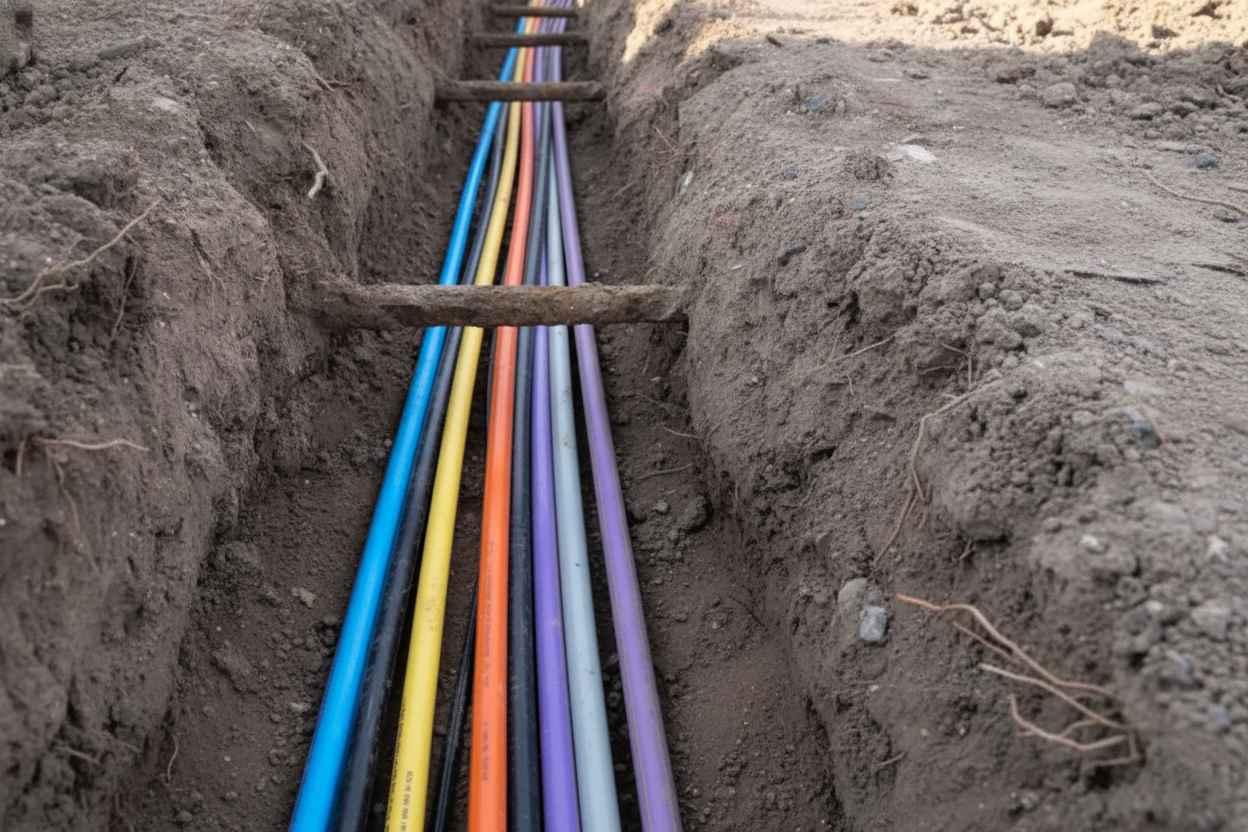
We use conduit to separate power points, data cables, and other utility lines to avoid interference. Commercial setups may involve shared trenches-here, good spacing and correct layering are key.
Careful conduit design not only organises lines but makes future upgrades far simpler. Our substation trench methods account for airflow and heat dissipation as well.
Direct Burial and Cable Protection
When using direct burial methods, the cable must be specially rated and often armoured. Extreme heat, rainfall, shifting soil, and pests must all be considered.
We use protective sleeves, heavy-duty casing, and sometimes rodent-block materials to keep cables intact and undisturbed for years to come.
Proper Handling and Laying Methods
Cables can be delicate-one wrong pull or kink can weaken the insulation. We handle every spool with care, using grip and pulling tools that prevent strain.
On-site storage is arranged away from moisture and dusty construction zones. Tension limits are closely maintained to prevent micro-tears during placement.
Termination, Connections, and Safety Compliance
Ending a cable run neatly is as critical as laying it. Every connection must be sealed tight, labelled clearly, and bonded correctly.
This final step ensures power flows efficiently and safely, meeting inspection protocols every time.
Splicing, Terminating, and Testing
For splicing and terminating, we use manufacturer-approved accessories and inspect every connection for resistance and stability.
Our instruments test insulation strength and alert us to faults before things go live. This guards against future flickers or outages.
Grounding, Bonding, and Earthing Systems
Grounding keeps people and property safe from electrical faults. It’s crucial for any underground setup, particularly in high-voltage areas.
We use certified bonding materials and make sure they’re in line with current standards. Each grounding point is checked for dielectric strength and stability.
Labelling and Inspection
All cables are labelled for future tracing. This saves time in electrical emergencies or when additional work is needed later on.
Our team conducts line inspections using visual checks, metres, and thermal cams to spot issues, then documents results for compliance records.
Maintenance, Fault Detection, and Repairs
Even with excellent planning, no system lasts forever without care. We make maintaining underground cabling simple and accessible.
Our services include fault detection, targeted repairs, and full replacements when age catches up with the system.
Causes and Prevention of Faults
Common causes include water penetration, soil movement, or overloaded circuits. Regular inspections prevent these from progressing into complete breakdowns.
Installing high-quality materials, maintaining proper load, and performing routine checks extend the lifespan of your underground cable network seamlessly.
Fault Detection Techniques
To pinpoint faults, we use signal tracing tools, voltage monitoring, and infrared imaging to spot changes in temperature or a drop in current strength.
This helps us fix problems early, avoiding costly shutdowns for both homes and workplaces across Melbourne.
Repair and Replacement Standards
If a cable is too damaged to repair safely, we follow complete replacement protocols and comply with all reporting needs.
Fast fixes aren’t enough-we ensure every repair or swap meets safety tests before power is restored to avoid further trouble.
Special Considerations in Cable Installation Projects
Some projects require added precaution. From renewable setups to telecom cabling, our approach adjusts to handle every unique situation effectively.
Telecom and Data Cabling
Data lines need stricter handling. Water intrusion in a poorly insulated joint could fail entire networks.
We use cables with high IP ratings and sealed junctions, primarily when installations occur in areas exposed to moisture or continuous foot traffic.
Working with High and Low Voltage Systems
High-voltage cables need more spacing, stronger insulation, and distinct labelling. Low-voltage systems, like garden lighting, still require correct placement.
We protect both with the same level of care- clear signage, physical barriers, and clean routing always in place.
Environmental and Site Conditions
Some Melbourne soils resist electricity or shift too easily. We adapt with soil conditioners or elevated trenches where needed.
Rainfall, salty air, or bush zones? We’ve seen it all. Our method considers how the environment impacts cables over time, ensuring reliability isn’t compromised.
Frequently Asked Questions
What training is required for underground cable installation?
Our electricians undergo certified training, including national electrical licensing, safety assessments, and on-site practice. We also stay updated through courses on new regulations and tools.
What fire resistance standards apply to underground cables?
Fire-rated cables are used in dense housing or enclosed underground corridors. These are compliant with AS/NZS fire resistance categories to delay spread and secure critical zones.
Can weather and seasons affect underground cable reliability?
Yes. Moisture during wet seasons or expansion in heat can stress cables. That’s why we use climate-adaptive materials and schedule installs during stable periods when possible.
What materials are best for cable insulation in ducting systems?
XLPE and PVC are preferred due to their heat resistance and water-blocking layers. These materials also last longer and won’t crack under pressure or UV exposure.
