
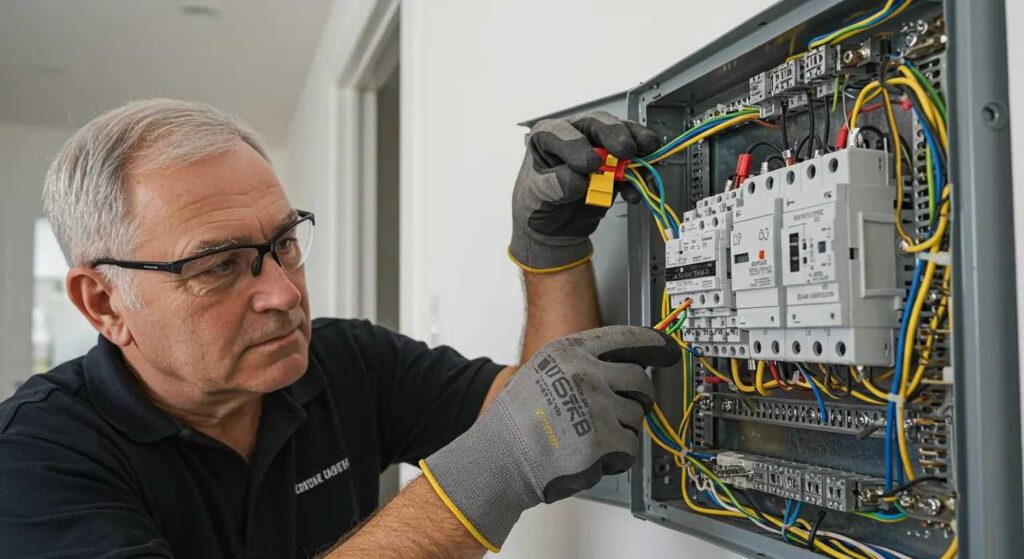
Flickering lights, outdated wiring, or constant circuit trips can turn a home into a daily frustration. Ignoring these issues could lead to safety hazards or expensive repairs down the track. A full electrical rewire can feel overwhelming, but knowing what to expect makes all the difference.
Rewiring a house isn’t just about replacing old cables—it involves compliance, tricky access points, and labour-intensive work. Factors like property size, accessibility, and material costs all impact the final price. Without expert guidance, budgeting for this project can quickly become confusing.
At I&B Electrical, we take the guesswork out of the process with clear pricing and expert advice. Whether it’s a minor upgrade or a complete overhaul, we ensure your home stays safe and efficient for years to come.
Factors Influencing the Cost
The price of rewiring an old property varies depending on several factors. The size of the house and the number of rooms significantly affect the cost. A larger space means more wiring, outlets, and labour. Older homes often require additional work, as the existing wiring may not meet modern standards.
Accessibility plays a big role too. If wiring is hidden behind walls, ceilings, or crawl spaces, it takes more effort to reach. In addition, permits and inspections can add to the breakdown of house rewire costs. Following local regulations ensures safety but also increases overall expenses.
Estimated Cost Based on House Size
Average costs depend heavily on the size of your home. Rewiring a smaller house with one or two bedrooms generally costs less. The cost of rewiring a 3-bedroom house is higher because there are more circuits and outlets to update.
For larger homes with five or more bedrooms, the whole house wiring cost can be significant. Some electricians charge based on rewiring cost per square foot or square metre, which gives a clearer estimate based on home size. No matter what, a proper assessment helps avoid unexpected costs.
Cost Breakdown: Materials and Labour
Understanding where the money goes is key. Rewiring materials cost includes cables, sockets, switches, and junction boxes. Higher-quality materials may be expensive but ensure durability.
Labour is another major expense. Electrician quotes for rewiring vary based on experience and location. Some professionals charge an hourly rate, while others provide a fixed house rewiring quote. If an electrical panel upgrade or new fixtures are needed, that adds to the total cost.
Cost Based on Property Type
Different property types come with different challenges. Rewiring an old house cost is usually higher because older wiring needs to be replaced entirely. Bungalows typically have easier access to wiring, reducing labour costs.
For newly built homes, the price is generally lower since the infrastructure is already in place. Apartments and townhouses may have restrictions that impact how the work is done. Listed or heritage properties often require special permits, increasing expenses further.
Additional Costs to Consider
The final bill isn’t just about replacing old wiring. Additional expenses like upgrading the electrical panel, installing new outlets, or updating light fixtures can add up. Kitchens and bathrooms often need specialised wiring due to higher energy demands.
Even a simple cost to change house wiring can increase if a home needs new circuits for modern appliances. Considering these elements helps in planning the price to rewire a house without last-minute surprises.
Ways to Reduce Rewiring Costs
Cutting costs without compromising safety is possible. Comparing multiple quotes gives a clearer estimate for house rewire and ensures a fair price. Bundling electrical work during renovations can also lead to savings since electricians can complete multiple tasks in one go.
Using an online rewiring cost calculator provides a rough estimate based on home size and wiring conditions. While DIY work may seem like an option, professional electricians ensure the job is done safely and up to code.
How Long Does Rewiring Take?
Rewiring a home isn’t a one-day job. The time required depends on the house size and complexity. A smaller place might take a few days, whereas a complete house rewire quote for a larger property often includes weeks of work.
Living in the home during the process can be disruptive. Power may need to be turned off in sections, and walls may require temporary openings. Understanding these inconveniences can help with planning and scheduling.
Worried About Hidden Costs? Let’s Talk Straight About Rewiring
Rewiring isn’t something you plan for every day, but when it’s needed, there’s no way around it. Whether it’s an ageing home, flickering lights, or safety concerns, the right approach makes all the difference. With careful planning, you can avoid surprises and make cost-effective choices.
Avoiding cheap fixes that lead to bigger problems later is key. A well-executed rewire adds value, enhances safety, and gives peace of mind. Cutting corners might seem appealing, but investing in quality ensures your home or business stays powered without frequent headaches.
At I&B Electrical, we provide transparent pricing and expert service, ensuring you get the best results without hidden surprises. Need a professional assessment? Contact us today and let’s get your wiring done right.
FAQs
What is the cost to rewire a 1,000 sq ft house?
The cost for rewiring a 1000 sq ft house varies based on labour, materials, and accessibility. On average, it ranges from a few thousand dollars to higher amounts depending on specific needs.
How much does it cost to rewire a 1,500 sq ft house?
The cost to rewire a 1500 sq ft home tends to be higher, particularly if an electrical panel upgrade is required. Getting an electrician’s estimate helps get a precise figure.
Is it worth rewiring an old house?
Yes, especially if the wiring is outdated or unsafe. Upgrading the electrical system reduces fire hazards and improves energy efficiency.
Can I get financial assistance for rewiring my home?
In some cases, government programs or energy efficiency grants may help reduce the cost. Checking with local authorities or energy providers can confirm available options.
