
Electricity makes life easier, but one loose wire or overloaded socket could put your home at risk. A flickering light or a buzzing outlet may seem harmless, until a sudden spark reminds you otherwise.
Frayed cords, outdated wiring, and overloaded circuits often go unnoticed until they cause bigger issues. Simple habits—like unplugging appliances or checking power points—can prevent disasters before they happen.
We know how important a safe home is, and that’s why we’re here to help. Our expert electricians ensure your home stays powered, protected, and free from electrical hazards.
Electrical Safety Tips at Home
Electricity makes life easier but can also be dangerous if not handled properly. Small mistakes can lead to fires or shocks from overloaded outlets to frayed wires. Keeping a few fundamental electrical safety precautions in mind can go a long way in maintaining electricity safety at home.
Common Electrical Hazards at Home
Many electrical issues go unnoticed until they become serious. An overloaded circuit can easily overheat, while old or damaged cords might expose live wires. Using extension cords as permanent fixtures poses a fire risk, and outdated wiring may not meet modern safety standards. Understanding the dangers of electricity at home helps prevent accidents before they happen.
Checking for common home electrical safety risks regularly can reduce unexpected hazards. Ensuring outlets aren’t overcrowded and replacing worn-out cords are simple steps that make a big difference. Taking home electrical hazard precautions today can prevent costly and dangerous problems later.
Essential Precautions for Electrical Safety
Electrical systems need attention just like any other part of the home. Regular electrical safety checks ensure that wires, outlets, and appliances remain in good condition. Proper grounding prevents unexpected shocks, while circuit breakers and surge protectors add an extra layer of protection.
Water and electricity are a dangerous mix. Keeping electrical devices away from sinks, bathtubs, or damp areas helps prevent short circuits. Implementing routine electrical safety measures for a home keeps everything running smoothly without unnecessary risks.
Safe Practices for Electrical Appliance Use
Appliances around the house need proper care to function safely. Unplugging devices when not in use saves power and prevents overheating. Checking for frayed cords ensures that small issues don’t become major hazards.
Electrical appliances that generate heat, such as microwaves or space heaters, need proper ventilation to avoid overheating. Using damaged devices can cause sparks or shocks, making regular maintenance essential for the safe handling of electrical appliances at home.
Electrical Safety in Different Areas of the Home
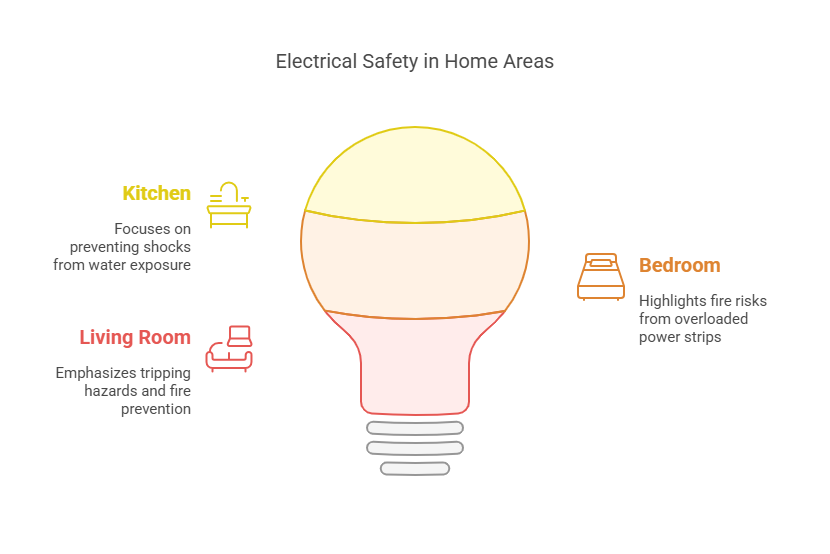
Different rooms have their own risks. Kitchens, bedrooms, and living rooms each require specific indoor electrical safety rules to protect both the home and its occupants.
Kitchen: Water exposure is a major concern. Keeping appliances away from sinks and using ground fault circuit interrupters (GFCIs) helps prevent shocks. Cords should be properly placed to avoid contact with heat or moisture.
Bedroom: Too many devices plugged into a power strip can overheat and become a fire risk. Electrical items should be kept away from bedding, and extension cords must be managed safely.
Living Room: Cords should be secured to prevent tripping hazards. Entertainment systems should never overload outlets; heaters must be positioned safely to avoid fires.
Child and Pet Electrical Safety
Curious kids and pets don’t understand electrical dangers. Installing safety plug covers keeps small fingers and paws away from live outlets. Keeping cords and outlets out of reach prevents accidental shocks.
Children should learn basic electrical safety rules early. Simple explanations about why outlets should not be touched can help prevent accidents. Pet-proof cord protectors stop animals from chewing through wires, ensuring electrical safety for both children and pets.
Fire Prevention and Electrical Emergencies
Small electrical warning signs shouldn’t be ignored. Flickering lights, burnt smells, or frequent breaker trips could indicate a problem. Identifying these early warning signs can help prevent electrical fires at home.
Smoke detectors should always be installed and working. Having a fire extinguisher nearby ensures fires can be tackled quickly. An emergency response plan helps everyone know what to do if an electrical fire starts, reducing panic and confusion.
Safe Use of Extension Cords and Power Strips
Extension cords should not be a permanent solution. Only high-quality, certified cords ensure reliability. Power strips should never be daisy-chained, and unplugging them when not in use reduces the risk of overheating.
Placing cords under rugs or furniture can damage them over time, increasing the chance of sparks. Following power board safety measures keeps homes safe from preventable fire hazards.
Electrical Safety During Home Renovations
Renovating a home involves electrical risks, especially when working near wiring. Turning off power before making electrical changes prevents dangerous shocks. Any major rewiring should be handled by a licensed electrician.
Following essential safety considerations for home electrical repairs includes using the right tools and following local electrical codes. Recognising potential hazards before starting any project helps to ensure electrical safety throughout home maintenance and upgrades.
Planning and Routine Electrical Safety Measures
Electrical systems need regular checks. Conducting periodic inspections helps identify small issues before they grow into costly problems. Keeping a maintenance log ensures that no system or appliance is overlooked.
Updating old wiring and outlets improves safety. Teaching household members simple electrical safety protocols ensures everyone knows how to prevent accidents. Planning electrical safety routines at home provides peace of mind and prevents unexpected hazards.
Small Mistakes Could Cost You—Here’s How to Stay Safe
One loose wire, an overloaded powerpoint, or a damaged cord—it’s easy to overlook the little things. But those little things could lead to dangerous hazards, putting your home, business, or loved ones at risk. Staying ahead of potential dangers isn’t about fear; it’s about being prepared and proactive.
Safe electrical habits should be second nature, preventing problems before they arise. A few simple precautions can make all the difference, keeping your space protected and ensuring everything runs smoothly. When it comes to safety, a little awareness goes a long way.
At I&B Electrical, we prioritise safety in every installation, repair, and upgrade. Let us handle your electrical needs with expert care—contact us today.
FAQs on Electrical Safety at Home
How can I prevent electrical fires in my home?
Look out for flickering lights, burnt smells, or frequent breaker trips. Use smoke detectors, and don’t ignore signs of faulty wiring.
What should I do in case of an electrical shock incident?
Turn off the power at the main switch immediately. If someone is in contact with live electricity, never touch them directly. Call emergency services if necessary.
How often should I inspect my home’s electrical system?
A professional inspection is recommended every few years. However, you should check outlets, cords, and appliances regularly for signs of damage.
